
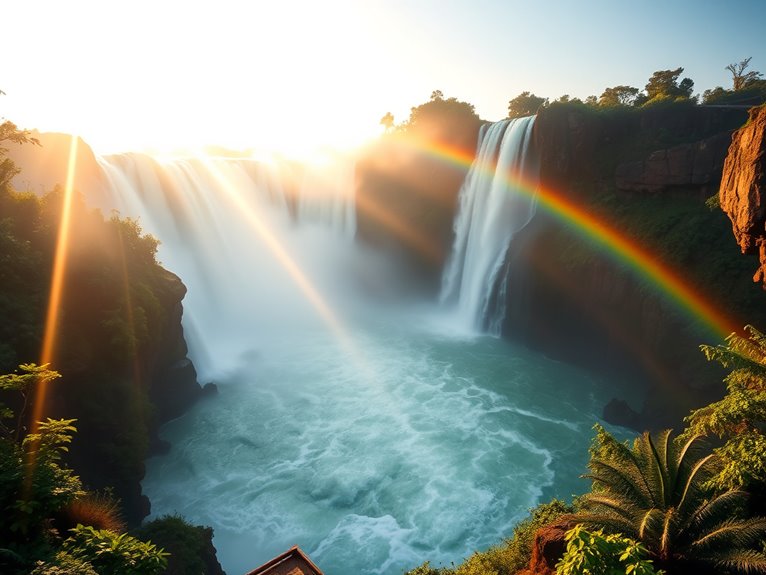
I’ve discovered that April through May and September through November offer the perfect sweet spot for experiencing Iguazu Falls’ breathtaking rainbows without battling massive crowds. You’ll enjoy decent water flow, comfortable weather, and clearer skies that create ideal conditions for rainbow photography at Devil’s Throat viewpoint. Avoid December through February when over one million visitors flood the park during South American summer holidays. Early morning visits (6-9 AM) provide the best lighting and wildlife viewing opportunities, while strategic planning guarantees you’ll capture those magical rainbow moments.
Peak Water Flow Season: December to March Spectacle
While most waterfalls have their quiet moments, Iguazu Falls becomes an absolute powerhouse during its peak season from December to March. You’ll witness up to 12,750 cubic meters of water thundering over the cliffs every second! The peak flow excitement during these months creates an unforgettable spectacle that’ll leave you speechless.
The heavy rainfall transforms the falls into a dramatic display of nature’s raw power. Those misty views you’ll experience come from the increased water volume creating thick veils around the cascades. February typically offers the highest water levels of the entire year. The tropical climate during this period brings substantial rainfall that elevates the Iguazu River’s volume significantly.
Weather Patterns and Climate Considerations Throughout the Year
Beyond the thundering waters, you’ll want to understand Iguazu’s year-round climate patterns before planning your adventure. Weather variations here are dramatic! January brings sweltering 26°C (78°F) heat, while June cools to a pleasant 17°C (62°F). The climate impact shapes everything from trail conditions to rainbow visibility.
Dramatic weather swings from sweltering 26°C summers to pleasant 17°C winters directly impact your Iguazu Falls experience and trail accessibility.
Summer (Dec-Mar): Hot, humid, and wet with extreme heat indices
Winter (Jun-Aug): Cool, dry, and comfortable with 5-6 sunshine hours daily
Shoulder seasons: Perfect balance of weather and fewer crowds
High humidity year-round means lightweight, breathable clothing is essential. Heavy rainfall can affect boat tours and make trails slippery. The falls are part of a protected UNESCO World Heritage site that preserves this unique ecosystem.
Tourist Seasons and Crowd Levels by Month
When you plan your Iguazu visit, understanding crowd patterns can make or break your experience. Tourist seasons here follow South American vacation schedules, not North American ones! December through February brings peak crowds—over one million visitors annually flock here during summer holidays. I’ve found effective visitor strategies include avoiding weekends and targeting March through August for quieter trails. Easter week and July create temporary crowd spikes even during low season. Smart crowd management means booking early during holidays but embracing shoulder months like September-November for that perfect balance of decent water flow and manageable visitor numbers. The cooler months offer colourful butterflies and rainbow sightings that add magical elements to your waterfall experience.
Shoulder Season Benefits: April-May and September-October
The shoulder season advantages are compelling! April-May offers cooler days (24-27°C) with crisp nights, while September-October provides warmer conditions (24-28°C). Both periods deliver 4-5 hours of daily sunshine and fewer tourists.
Your outdoor activity recommendations include hiking trails and boat tours—perfect when humidity stays low. Plus, you’ll save money on accommodations while witnessing spectacular rainbows from increased rainfall! The tropical climate at Iguazu Falls creates consistently warm temperatures year-round, making these shoulder months ideal for comfortable exploration without the extreme heat of summer.
Trail Accessibility and Water Level Impact on Activities
Water levels at Iguazu Falls dramatically affect which trails you can access and what activities you’ll enjoy during your visit. I’ve seen high water completely close popular spots like San Martín Island, while low season often opens up trails that are otherwise floded or restricted. Understanding these seasonal changes will help you plan the perfect itinerary based on what’s actually available when you arrive!
When planning your visit, it’s essential to research accessibility options in advance, as adapted trails and wheelchair-accessible platforms are available on both sides of the falls but vary significantly by location and route.
High Water Trail Closures
Although Iguazu Falls offers breathtaking views year-round, high water levels can temporarily shut down key trails and viewing platforms. I’ve seen closures last from days to weeks when the Iguazú River surges dangerously high.
Trail safety becomes the park’s top priority during these events. In December 2024, water volume reached over 8 million liters per second! That’s when authorities close walkways to Devil’s Throat and other popular spots.
You’ll want to check visitor notifications on the park’s official website before visiting. The rainy season from November to March brings the highest risk of temporary closures due to rapidly changing conditions. Don’t worry though – even with closures, alternative trails usually remain open for spectacular views.
San Martín Island Access
Reaching San Martín Island requires more than just walking – you’ll need to catch a free boat launch from the end of Paseo Inferior trail. Here’s the catch: island accessibility depends entirely on water levels, which change daily! Park officials make access decisions at 10:30 AM each morning.
When open, you’ll discover incredible close-up views of Salto San Martín waterfall. However, visitor safety comes first – high water frequently closes the island for weeks at a time. Past flooding has made the island’s access challenging since 2014. The last boat departs at 3:15 PM, so plan accordingly. I recommend checking conditions early and having backup plans ready!
Low Season Trail Benefits
Planning your visit during low season transforms your entire Iguazu Falls experience from crowded chaos to peaceful exploration! You’ll discover incredible low season trail benefits that make hiking dramatically more enjoyable.
Trail Accessibility Advantages:
- Uncrowded paths mean easier movement and better photo opportunities
- Shorter facility queues and more accessible park staff
- Enhanced wildlife spotting chances due to reduced noise
Water Level Benefits:
- Fewer trail closures from flooding
- Safer, more stable boardwalks
- Less slippery surfaces for comfortable hiking
- During the rainy season, some trails and the island of San Martín may become inaccessible
Activity Improvements:
- Smaller, personalized tour groups
- Flexible self-guided pacing
- Better guide interaction and commentary
These trail benefits create unforgettable experiences!
Rainbow Viewing Opportunities and Photography Tips
Since rainbows appear when sunlight hits the waterfalls’ mist at just the right angle, timing your visit to Iguazu Falls can make the difference between ordinary photos and absolutely magical shots! I’ve found the best rainbow photography happens during March through July when clearer skies create ideal conditions.
For stunning rainbow locations, head to Garganta do Diabo viewpoint or the Trilha das Cataratas trail. Early morning and late afternoon offer perfect lighting angles. The falls themselves reach impressive heights of 82 meters at Devils Throat, creating massive amounts of mist that enhance rainbow formation. Don’t forget your polarizing filter – it’ll enhance those vibrant colors while reducing glare from the mist. Trust me, you’ll capture breathtaking shots!
Wildlife Watching and Outdoor Activity Conditions
I’ve discovered that timing your visit around wildlife activity patterns can make or break your animal-spotting experience at Iguazu Falls. Animals are most active during early morning hours (6-9 AM) and late afternoon (4-6 PM), when temperatures are cooler and they’re searching for food. The parks are home to an incredible 2000 species of plants and over 400 bird species, making patient observation during these peak hours especially rewarding. You’ll also want to take into account hiking comfort conditions, since the subtropical climate can swing from pleasantly warm to uncomfortably humid depending on the season!
Wildlife Activity Patterns
When you’re dreaming of spotting colorful butterflies and exotic birds at Iguazu Falls, timing becomes everything! I’ve discovered that butterfly feeding peaks during warm months from September to March, when these stunning creatures are most active. Early morning and late afternoon offer your best chances for wildlife encounters.
During the hot, wet season (October-March), you’ll witness increased wildlife migration and activity, though rain might interrupt your plans. The subtropical rainforest bursts with life during these months! Conversely, cooler dry months reduce overall animal movement. Temperature shifts dramatically affect feeding patterns and migration cycles throughout the park.
The blooming flora during spring creates an enhanced backdrop for wildlife photography and observation. Fall brings drier conditions that make trails safer for families seeking wildlife encounters, while winter’s sunny weather provides excellent visibility for spotting animals despite shorter daylight hours.
Hiking Comfort Conditions
Spotting wildlife requires comfortable hiking conditions, and I’ve learned that your physical comfort directly impacts how long you can stay on the trails searching for those perfect animal encounters! Winter months offer the best hiking safety conditions with lower temperatures and reduced humidity.
Here are my essential gear recommendations for comfortable wildlife watching:
- Waterproof footwear – Metal boardwalks become dangerously slick when wet
- Insect repellent – Mosquito activity peaks during warmer months
- Hydration pack – Summer heat can cause rapid dehydration and fatigue
- Quick-dry clothing – Year-round humidity makes moisture-wicking fabrics essential
Plan your wildlife expeditions during cooler months for maximum trail time! The expansive trail system covers 4km crescent-shaped terrain along the falls, providing numerous vantage points for observing local fauna throughout your hiking adventure.
Strategic Planning for Avoiding Crowds and Maximizing Experience
Since Iguazú National Park welcomed over 3.2 million visitors in 2024, you’ll want a solid game plan to dodge the worst crowds and make every moment count.
Understanding crowd dynamics helps you time your visit perfectly. Brazilian tourists make up 60% of visitors, creating predictable patterns during their holidays. I recommend visiting March through May or September through November for the sweet spot between weather and crowds.
Smart visiting strategies include booking early morning tours and avoiding weekends during peak season. Did you know that late afternoon visits often reveal quieter trails? Reserve accommodations early during shoulder seasons when hotel prices drop but accessibility remains excellent. Consider bundled activity packages that start at USD 265 for enhanced experiences that combine multiple attractions at reduced rates.
Frequently Asked Questions
What Are the Park Opening Hours and Do They Change Seasonally?
I’ll break down the visiting hours and park seasonality for you! Argentina’s side opens 8am-6pm (last entry 4pm), while Brazil operates 9am-4pm weekdays and 8:30am-4pm weekends. Here’s where seasonality kicks in: Argentina reduces hours by one hour starting March 5, 2025. Brazil extends hours during holidays (December 21-January 31). Both sides stay open year-round, so you’re covered!
How Many Days Should I Plan to Spend at Iguazu Falls?
I recommend planning at least 2-3 days for your ideal itinerary at Iguazu Falls. You’ll need one full day for Argentina’s side with Devil’s Throat, and half a day for Brazil’s panoramic views. Here’s my travel tips: don’t rush both sides in one day – you’ll miss the amazing boat ride! I suggest three nights for a relaxed pace, giving you time for helicopter tours and jungle treks too.
Are There Accommodation Options Inside the National Park Itself?
Like finding a hidden gem in the rainforest, I can tell you there are indeed lodging options inside both sides of the park! On the Brazilian side, you’ll find the luxurious Belmond Hotel das Cataratas as your only choice. The Argentinian side offers the Gran Melia Iguazu. These exclusive accommodations provide incredible park amenities including early trail access, stunning waterfall views, and immersive nature experiences that day visitors simply can’t enjoy!
What Vaccination Requirements or Health Precautions Are Needed for Visiting?
I’ll recommend getting a yellow fever vaccination before visiting Iguazu Falls, especially since you’ll be near Brazil’s borders. You should consult a travel health specialist 4-6 weeks beforehand! Essential health precautions include packing strong insect repellent for dengue and Zika protection. Don’t forget to verify your routine vaccinations are current and bring copies of vaccination certificates. Consider travel health insurance too—it’s worth the peace of mind!
Can I Visit Both the Argentine and Brazilian Sides in One Day?
Yes, I can confirm you can visit both sides in one day! My visiting tips include starting early (7-8am) and booking guided tours that handle border crossings. Side comparisons show Argentina needs 8-10 hours for full exploration, while Brazil takes 3-4 hours. You’ll need your passport for border transfers, which add 30-60 minutes. Though technically feasible, it’s exhausting and rushes the experience—consider dedicating separate days for maximum enjoyment.


