
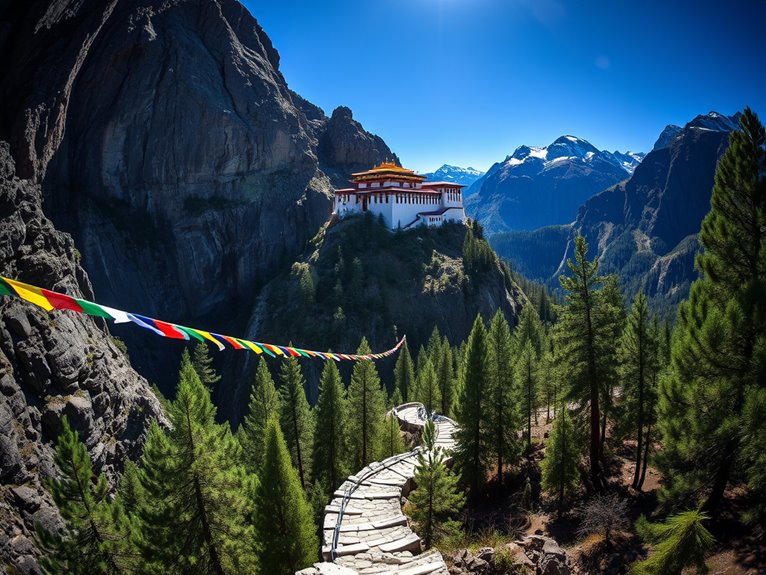
Tiger’s Nest Monastery perches dramatically 3,000 feet above Paro Valley, requiring a challenging 6-kilometer round-trip trek with 900 meters of elevation gain. I’ll tell you this spiritual journey tests your endurance but rewards you with breathtaking Himalayan views and access to Bhutan’s most sacred Buddhist site. You’ll need proper hiking gear, modest clothing, and cardiovascular fitness for the stone staircases and narrow pathways. The monastery’s white walls and golden roofs create stunning contrasts against granite cliffs, while exploring this guide reveals essential preparation strategies.
The Sacred History and Spiritual Legacy of Tiger’s Nest
Perched dramatically on a cliff 3,000 feet above the Paro Valley, Tiger’s Nest Monastery holds secrets that’ll make your jaw drop. This isn’t just another pretty building – it’s where Guru Rinpoche literally flew in on a tigress back in the 8th century! Can you imagine that arrival?
The sacred narratives here shaped Bhutan’s entire spiritual heritage. Guru Rinpoche meditated in the cave below, establishing Buddhism’s foundations in Bhutan. While the actual monastery was built in 1692 by Tenzin Rabgye, the site’s spiritual power has drawn pilgrims for over 1,000 years. The monastery includes eight caves, four of which remain easily accessible to visitors today. That’s some serious spiritual legacy!
Location and Dramatic Cliffside Setting
When I first saw Tiger’s Nest Monastery perched at 3,120 meters above sea level, I couldn’t believe something so magnificent could cling to a sheer granite cliff! You’ll find this architectural marvel dramatically suspended above Paro Valley, creating one of the world’s most breathtaking monastery settings. The way this sacred structure seems to grow right out of the granite rock face will leave you speechless before you even begin your trek. From this spectacular vantage point, you’ll enjoy breathtaking views of the surrounding mountainous terrain that stretch endlessly across the Himalayan landscape.
Paro Valley Elevation Details
The dramatic landscape of Paro Valley sits at an impressive 2,200 meters (7,218 feet) above sea level in western Bhutan’s mountainous terrain. I’ll help you understand how these elevation variations affect your trek to Tiger’s Nest Monastery!
The altitude impacts you’ll experience include:
- Breathing changes – You might feel slightly winded due to thinner air at this elevation
- Temperature drops – Expect cooler weather, especially during early morning or evening hours
- Stunning views – Higher elevation means incredible panoramic vistas of surrounding peaks reaching 7,314 meters
This elevation creates perfect conditions for the monastery’s dramatic cliffside position above the valley floor. The pure air quality at this altitude provides an especially refreshing experience for travelers coming from polluted urban environments.
Granite Cliff Architecture
Rising dramatically from Paro Valley’s floor, Tiger’s Nest Monastery clings to a sheer granite cliff face 900 meters above the valley below! This incredible cliff dwelling showcases how Buddhist architects masterfully integrated sacred buildings with natural granite formations.
I’m amazed by how the monastery’s white walls and gold-plated roofs contrast against the raw cliff face. The builders used iron pegs hammered directly into the granite, supporting wooden beams that extend the structure outward. Natural caves and rock outcroppings became integral rooms and sanctuaries.
You’ll notice how the four main temples seem to grow from the granite formations themselves! The monastery chambers are connected by intricate staircases, creating a complex vertical layout that maximizes the dramatic cliff-side location.
Planning Your Trek: What You Need to Know
I’ll help you plan a successful trek to Tiger’s Nest that matches your fitness level and keeps you comfortable throughout the journey. You’ll need to assess your physical readiness, pack the right gear, and time your visit perfectly to make the most of this incredible adventure. The monastery sits at an impressive 3120 meters above sea level, so proper preparation becomes even more important for your comfort and safety. Let’s cover the essential preparation steps that’ll turn your monastery hike into an unforgettable experience!
Physical Fitness Requirements
Before you lace up those hiking boots, honestly assess whether you’re ready for this moderately challenging adventure! This fitness assessment isn’t meant to scare you—it’s about setting realistic expectations for your Tiger’s Nest journey.
Here’s what you’ll face during this trek:
- Distance Challenge: 6 kilometers round-trip with 900 meters of elevation gain over 4-5 hours
- Altitude Considerations: Over 3,000 meters above sea level means less oxygen and potential breathlessness
- Steep Terrain: Moderately difficult trail with particularly challenging sections near the monastery
The trail features stone staircases and narrow pathways that demand extra caution as you navigate toward the monastery. I’d recommend regular cardiovascular training beforehand. Most people with average fitness complete this hike successfully!
Essential Gear Preparation
Five essential gear categories will make or break your Tiger’s Nest adventure! I’ll walk you through my complete hiking essentials gear checklist that’s saved countless trekkers from misery.
Clothing: Layer up with moisture-wicking base layers, long sleeves, and waterproof jackets. The monastery requires modest coverage anyway!
Footwear: Broken-in hiking boots with ankle support are non-negotiable on those steep, rocky paths.
Accessories: Pack sun protection, warm hats, and headlamps for early starts. You can also rent walking sticks at the parking area shops if you don’t have your own trekking poles.
Backpack: A small day-pack handles water, snacks, and cameras perfectly.
Safety: First aid, sunscreen, and trekking poles prevent disasters during your 3-4 hour climb.
Weather and Timing
Having the right gear means nothing if Mother Nature doesn’t cooperate with your Tiger’s Nest plans! Understanding weather patterns can make or break your trek experience.
The best months are:
- Spring (March-May) – Mild temperatures with colorful valley blooms
- Autumn (September-November) – Dry, sunny days with crystal-clear mountain views
- Winter (December-February) – Cooler but manageable, though mornings drop below 10°C
Expect huge temperature swings! You’ll start chilly at 6°C, then heat up to 29°C by afternoon. Start early to avoid thunderstorms, especially during monsoon season when trails become treacherous. When planning your visit, check for periods of steady atmospheric pressure as these typically indicate more stable weather conditions for trekking.
The Hiking Experience: Trail Details and Key Stops
When you’re ready to tackle the Tiger’s Nest Monastery trail, you’ll find yourself on a well-maintained dirt path that stretches eight to nine kilometers round-trip. Here are essential hiking tips for your journey: start early morning to beat crowds and heat! The trail highlights include passing under colorful prayer flags and crossing a dramatic bridge over a waterfall near the monastery.
You’ll encounter key stops along the way. At the halfway point, there’s a cafeteria offering refreshments and restrooms—perfect for recharging. Stone steps mark the final approach, creating an authentic mountain experience that’s challenging yet achievable. The trek involves an elevation gain of 1,700 feet, making it a true endurance test at high altitude.
Architectural Marvel and Post-Fire Restoration
Perched dramatically on a sheer rock face 900 meters above Paro Valley, Tiger’s Nest Monastery stands as one of Bhutan’s most stunning architectural achievements. The whitewashed walls and golden roofs create breathtaking contrast against rugged cliffs. You’ll marvel at the intricate wooden carvings adorning every doorway and balcony.
Here’s what makes this monastery extraordinary:
- Fire Recovery: After devastating 1998 fire damage, complete architectural restoration preserved original grandeur
- Traditional Craftsmanship: Master artisans used ancient woodworking techniques during rebuilding
- Modern Safety: Hidden fire protection systems protect without compromising aesthetic appeal
The jabzhi-style roof topped with golden finials showcases Bhutanese ingenuity perfectly! This sacred site, founded in 1692, represents centuries of Buddhist tradition and spiritual significance in Bhutan’s cultural heritage.
Cultural Significance and Religious Practices
Beyond its stunning architecture, Tiger’s Nest Monastery pulses with spiritual energy that’s shaped Bhutan’s soul for over 1,200 years. I’ll tell you about the profound religious practices that make this place extraordinary.
Vajrayana Buddhism Hub
This monastery serves as Bhutan’s most sacred Vajrayana Buddhist site. Monks here practice meditation techniques passed down since Guru Rinpoche’s time in the 8th century. The journey to Tiger Nest itself symbolizes the Buddhist pursuit of enlightenment, transforming each step into a spiritual experience.
Cultural Immersion Experience
You’ll witness authentic meditation practices during your visit. Pilgrims from worldwide come seeking spiritual enlightenment in the same cave where Padmasambhava meditated for three years, making your cultural immersion genuinely transformative.
Essential Visitor Guidelines and Practical Advice
Since proper preparation makes the difference between a memorable pilgrimage and a challenging ordeal, I’ll share the essential guidelines that’ll guarantee your Tiger’s Nest journey goes smoothly.
Proper visitor etiquette supports conservation efforts while ensuring respectful access:
- Dress modestly – Cover shoulders and knees, remove hats before entering buildings, and avoid flashy clothing that disrupts the sacred atmosphere.
- Follow photography rules – Leave cameras with security before entering monastery buildings, as photography’s prohibited inside these holy spaces.
- Plan strategically – Start early, carry water and snacks, wear sturdy shoes, and budget 500 Ngultrum entry fee for this unforgettable spiritual experience! The monastery was carefully restored after a devastating fire in 1998, making preservation of this sacred site even more crucial.
Frequently Asked Questions
Can I Visit Tiger’s Nest Monastery if I Have a Heart Condition?
I’d strongly recommend consulting your doctor before attempting this trek with a heart condition. The monastery sits at 10,232 feet with steep climbs that’ll challenge your cardiovascular system! Heart condition precautions include getting medical clearance and carrying prescribed medications. My trekking recommendations? Consider stopping at the halfway cafe instead of the full ascent, hire an experienced guide, and pace yourself carefully with frequent breaks.
Are There Bathroom Facilities Available During the Trek to the Monastery?
I’ll share the restroom locations you’ll find during your trek! For trekking preparation, definitely use the base camp facilities before starting – it’s your best option. You’ll find another bathroom at the halfway café, which is perfect for a break. However, I’d avoid the monastery’s facilities since they’re reportedly unhygienic and scarce. Plan your water intake wisely to minimize bathroom needs during the hike!
What Is the Cost of Entry Tickets and Guide Fees?
I’ll break down the entry ticket prices and guide fee ranges for you! Non-Bhutanese visitors pay around 2,000 BTN ($25 USD), while regional tourists from India, Bangladesh, and Maldives get reduced rates at 1,000 BTN ($12 USD). Kids under five enter free, and ages 5-18 pay half price. Guide fees are mandatory but typically bundled into your tour package rather than charged separately, making the overall cost more predictable.
Can I Bring My Mobile Phone and Will There Be Signal?
I need to tell you about mobile restrictions at Tiger’s Nest! You can’t bring your phone inside the monastery – they’re completely banned for security and sacred reasons. You’ll store it in free lockers before entering. Regarding signal availability, don’t expect much! The trail has weak, intermittent coverage that’s pretty unreliable. Your phone won’t help much anyway since you can’t use it inside the monastery itself.
Are There Accommodation Options Near the Monastery for Overnight Stays?
Like finding treasure at rainbow’s end, I’ll help you discover overnight options near Tiger’s Nest! You’ll find several accommodation choices within striking distance of the monastery. Tiger’s Nest Resort offers traditional Bhutanese architecture with monastery views, while local guesthouses provide authentic cultural experiences. Luxury resorts like Amankora and boutique hotels are also available. Remember, you’ll need valid trekking permits regardless of where you stay. Most accommodations offer free WiFi and locally-sourced vegetarian cuisine!

