
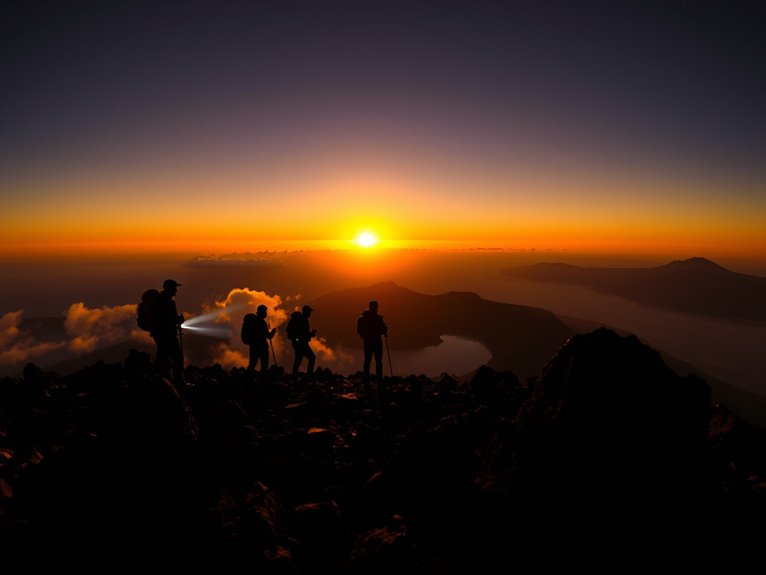
Mount Batur’s sunrise trek is a challenging but rewarding 1.5-2.5 hour climb up Bali’s active volcano, requiring sturdy hiking boots, layered clothing, and 1-2 liters of water. I recommend hiring a guide for safety on the steep 70-80 degree inclines and loose volcanic rock. Pack a headlamp, rain jacket, and camera with ISO 100-200 settings for stunning sunrise photos. The dry season (May-September) offers the best conditions, though temperatures drop to 12°C at summit. There’s much more preparation involved for this incredible adventure.
Mount Batur: Active Volcano and Trekking Destination
While many travelers flock to Bali’s beaches, Mount Batur offers something completely different – an active volcano adventure! Standing 1,717 meters tall, this somma volcano has erupted 22 times since 1804. The most recent eruptions happened between 1999-2000, making it one of Indonesia’s 127 active volcanoes.
What makes Mount Batur special isn’t just its geological power – it holds sacred significance for Balinese people. You’ll need to respect local customs when visiting, including appropriate dress codes. The volcano sits within two ancient calderas and features solfataras reaching 80°C! It’s currently at Alert Level 2 due to ongoing seismic activity.
Mount Batur rises 686 meters above the caldera lake surface, creating a dramatic landscape that attracts both adventurers and geology enthusiasts.
Trail Difficulty and What to Expect
I’ll be honest with you – the Mount Batur trek isn’t a casual morning walk! You’ll face steep rocky sections that feel more like scrambling than hiking, especially when you’re climbing 70-80 degree inclines in complete darkness. The trek typically takes anywhere from 1.5 to 2.5 hours depending on which starting point you choose and your fitness level. Let me walk you through what your body and mind need to handle, plus the safety concerns that could make or break your sunrise adventure.
Steep Rocky Terrain Challenges
When you’re planning your Mount Batur sunrise trek, the steep rocky terrain will be your biggest challenge. You’ll face 45-degree gradients on loose volcanic rock that’s incredibly slippery. The uneven surfaces demand constant attention to your footing – one wrong step could mean trouble!
Here are essential trail navigation tips for conquering these obstacles:
Key climbing techniques:
- Test each step before committing your full weight
- Use your hands for balance on rock-climbing sections
- Take frequent breaks to manage the 1,717-meter altitude
Rain makes everything worse, so check weather conditions beforehand. Your fitness level matters, but proper technique beats raw strength every time! While the ascent presents these challenges, remember that the descent can be even more challenging due to the loose volcanic rock surface becoming harder to navigate when moving downhill.
Physical Fitness Requirements
Good news awaits most hikers – Mount Batur’s physical demands won’t break you! You’ll tackle 500 meters of elevation gain over 3-5 kilometers in roughly 2 hours. That’s manageable for most reasonably fit people.
Here are my essential fitness tips:
- Build basic endurance through regular walking
- Practice hiking etiquette by maintaining steady pace behind others
- Strengthen your ankles for loose rock terrain
The steep inclines aren’t excessively long, making this hike much easier than Mount Agung. You won’t face altitude sickness here either! The loose volcanic soil makes footing challenging throughout most of the climb, so expect slippery conditions. Focus on consistent cardio preparation rather than intense training.
Weather and Safety Considerations
Although Mount Batur’s elevation won’t challenge you like Everest, the weather here can surprise even experienced hikers! Temperatures swing from 12°C to 21°C rapidly, and humidity effects during rainy season (January-February) can reach 90%. That’s like breathing through a wet towel!
Pack essential weather gear: lightweight rain jacket, warm layers, and trekking shoes with good grip. Trails become slippery after rain, and fog can limit visibility drastically. Don’t worry though – jacket rentals are available from some services.
The payoff? Clear sunrise skies offer breathtaking panoramic views of Lake Batur that’ll make every challenging moment worth it! Mount Batur attracts hundreds of visitors year-round, making it the most popular trekking destination in Bali.
Best Starting Points for Your Ascent
Choosing the right starting point can make or break your Mount Batur adventure! Toya Bungkah stands out as the most popular choice, offering convenient access to natural hot springs and stunning lake views. The 5.5 km trekking routes provide cultural experiences through local villages.
| Starting Point | Distance to Summit | Key Features |
|---|---|---|
| Toya Bungkah | 5.5 km | Hot springs, lake views |
| Pura Jati | 4 km | Shorter route, steeper |
| Serongga | 6 km | Less crowded, scenic |
| Songan | 7 km | Longest route, cultural villages |
I recommend Toya Bungkah for first-timers due to its excellent tourist infrastructure and relaxing post-trek amenities! The trek to the summit takes approximately 2 hours regardless of your chosen starting point, with multiple resting areas available along the way to help you recover your energy.
Essential Gear and Packing Checklist
Preparation separates successful Mount Batur climbers from those who struggle up the volcanic slopes! Your hiking apparel makes the difference between comfort and misery. I recommend sturdy hiking shoes with ankle support—trust me, rocky volcanic terrain isn’t forgiving on casual footwear. Smart packing strategies include layering breathable shirts with warm fleece for temperature changes. Don’t forget your headlamp for pre-dawn starts and 1-2 liters of water for high-altitude hydration. Pack lightweight rain gear, energy snacks, and sunscreen in a comfortable backpack. Remember to check the weather conditions before your trek to ensure safe climbing conditions and avoid postponing your adventure. Proper preparation transforms this challenging trek into an unforgettable sunrise adventure!
Safety Preparation and Guided Tours
I can’t stress enough how vital proper safety preparation becomes when you’re planning your Mount Batur adventure. You’ll need essential safety equipment, a reliable local guide, and a solid emergency plan before you set foot on that volcanic terrain. The volcano is officially deemed safe for travelers by Indonesia’s Center for Volcanology of Geological Hazard Mitigation, providing additional peace of mind for your trek. Let me walk you through each of these key safety components that could literally save your life on the mountain.
Essential Safety Equipment
Success on Mount Batur’s volcanic slopes depends heavily on having the right safety gear before you take your first step into the darkness. I can’t stress enough how hiking safety starts with proper equipment maintenance and selection.
Here’s what you’ll absolutely need:
- Sturdy hiking boots with ankle support for uneven volcanic terrain
- Headlamp or flashlight for pre-dawn navigation in complete darkness
- Sun protection gear including hat, sunglasses, and sunscreen for summit exposure
- Basic first aid kit for handling minor injuries on remote trails
Don’t forget your cell phone for emergency communication! Always remember that solo hiking is strongly discouraged on Mount Batur, and having an experienced guide provides essential permits and local knowledge for safe navigation.
Choosing Local Guides
Did you know? Tours start at 2-3 AM for that perfect sunrise view! Book through WhatsApp for easy coordination. Expert guides provide detailed knowledge of Mount Batur and ensure a safe, memorable trekking experience.
Emergency Protocols Planning
When you’re trekking Mount Batur in the pre-dawn darkness, proper emergency planning can literally save your life! I’ve learned that preparation makes all the difference between a memorable adventure and a dangerous situation.
Here’s my essential emergency protocol checklist:
- Emergency communication devices – Pack your phone plus backup two-way radios for dead zones
- Terrain navigation tools – Bring headlamps, GPS devices, and study route maps beforehand
- Weather monitoring – Check forecasts and have evacuation plans for sudden storms
- Safety equipment – Carry first aid kits, extra water, and sturdy trekking poles for stability
Smart planning transforms potential disasters into manageable challenges! The volcanic terrain features loose gravel and rocky surfaces that can cause slips, making proper footwear and careful footing essential for preventing falls.
Capturing the Perfect Sunrise Photos
Although Mount Batur’s sunrise draws thousands of visitors each year, capturing that perfect shot requires more than just showing up with your phone. I recommend mastering these essential photography techniques before your trek.
Camera Settings That Work
Set your ISO between 100-200 to minimize noise. Use f/8-f/11 for sharp landscapes with good depth of field. Manual white balance guarantees consistent colors as dawn light changes rapidly.
Composition Tips for Success
Arrive early to scout the best angles! Include Lake Batur and the caldera as foreground elements. Shoot during blue hour for dramatic atmospheric effects, and don’t forget your tripod for those vital long exposures. The majority of your shots will be taken in low light conditions, so practice these techniques beforehand to maximize your success.
Weather Conditions and Seasonal Considerations
Understanding Mount Batur’s weather patterns will make or break your sunrise adventure! I’ve learned that weather tracking becomes vital since conditions change rapidly at this elevation. Temperatures range from 12°C to 18°C at the summit, with December through March being coldest.
Here’s what you need to know:
- Dry season (May-September) offers clearer skies and better visibility
- Rainy season (October-April) brings slippery trails and limited views
- Humidity exceeds 90% during wet months, making temperatures feel warmer
- Fog frequently covers the summit, especially during rainy periods
Smart packing strategies include lightweight rain jackets and warm layers for those chilly pre-dawn temperatures! Consider planning your trek during shoulder seasons like April, May, or October when you’ll encounter fewer crowds while still enjoying favorable weather conditions.
Frequently Asked Questions
Can I Trek Mount Batur Without a Guide?
While you *could* technically trek Mount Batur solo, it’s become nearly impossible! I’ve seen countless hikers get turned away at trailheads by persistent locals. Safety concerns and trail navigation challenges make guides practically mandatory now. You’ll face hassling, potential wrong directions, and missing essential gear like torches. Most visitors pay $40-70 for guided packages. Though some determined hikers negotiate their way up, I’d recommend booking a guide for convenience and peace of mind.
How Much Does a Mount Batur Sunrise Trek Cost?
I’ll break down the cost breakdown for you! Tour packages start around $25 USD for group treks, but can reach $75 for private experiences. Most all-inclusive packages cost about $30-45 and cover transportation, breakfast, and guides. Don’t forget entrance fees add another $7 per person! I’d recommend comparing different tour packages since prices vary considerably. Private tours cost more but offer personalized attention if you’re willing to splurge.
Are There Bathroom Facilities Available During the Hike?
I’ll be honest – there aren’t any bathroom facilities once you start hiking up Mount Batur! You’ll only find toilets at the base camp before beginning your trek. Following proper hiking etiquette means using these facilities beforehand and maintaining trail cleanliness throughout your climb. The toilets cost around Rp. 5,000-10,000 ($0.35-0.70). I recommend bringing tissues and hand sanitizer, as you’ll need to rely on natural spots if necessary during the hike.
What Time Should I Start Hiking for Sunrise?
I recommend starting your hike between 3:00-4:00 am for the best experience! This timing gets you to the summit before 6:00 am for prime sunrise viewing. During the best hiking seasons (avoiding July-August crowds), you’ll have more space at the top. Essential trail safety tips: bring a headlamp for the dark ascent and dress in layers since it’s chilly before dawn. Most tours pick you up around 1:00-2:00 am.
Is Mount Batur Suitable for Children or Elderly Hikers?
I’d say Mount Batur can work for both groups with proper family considerations! Children need reasonable fitness and constant supervision, while elderly hikers should honestly assess their abilities first. The rocky terrain demands safety measures like appropriate gear and guided tours. I recommend physical conditioning beforehand for everyone. Remember, it’s challenging but doable – just guarantee you’re realistic about capabilities and prioritize safety over summit goals!


