
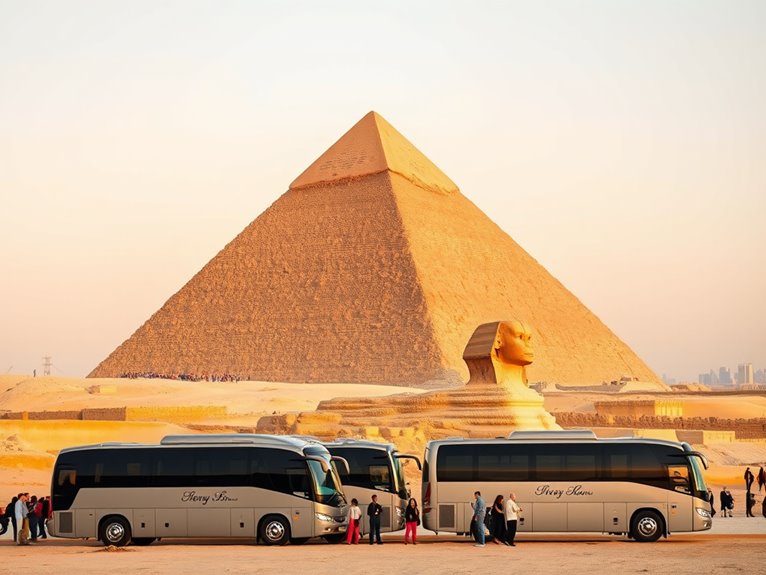
I’ll guide you through everything you need for your Giza Pyramids day trip from Cairo! You can reach the complex in just 15 minutes by taxi for $1-$2, or take the metro plus a short taxi ride. The main attractions include the Great Pyramid of Khufu, Khafre’s Pyramid, Menkaure’s Pyramid, and the iconic Great Sphinx. Start early morning for cooler temperatures and better photos, bring only essentials, and politely decline persistent vendors with “La shukran.” There’s so much more to maximize your ancient adventure.
Getting There: Transportation and Logistics From Cairo
The journey from Cairo to the Giza Pyramids offers several transportation choices, each with distinct advantages and costs. Metro options remain limited due to ongoing construction, requiring a taxi from Giza stations. Taxi services provide the most direct route—just 15 minutes for $1-$2! I’d recommend Uber or legitimate taxis for reliability. Driving options include rental cars with GPS navigation, though Cairo’s unpredictable traffic can be challenging. The total distance from Cairo to the Great Pyramid at Giza spans approximately 9.5 miles. Safety precautions are essential: always verify taxi legitimacy and use reputable rental services. Private transfers offer luxury but cost more than public transport.
What to Expect: Main Attractions at the Giza Complex
Once you arrive at the Giza Complex, you’ll encounter three magnificent structures that have captivated visitors for over 4,500 years. I’ll walk you through the main attractions you can’t miss: the legendary Great Pyramids, the mysterious Great Sphinx, and the fascinating Valley Temple Complex. The Great Sphinx, attributed to Pharaoh Khafre, stands as an ancient symbol of strength and wisdom with its impressive 4.7 out of 5 rating from thousands of visitors. These ancient wonders offer an incredible journey through Egypt’s most celebrated archaeological treasures!
The Great Pyramids
Standing majestically on the Giza plateau, these ancient monuments will absolutely take your breath away! You’ll encounter three main pyramids that showcase incredible ancient architecture spanning over 4,500 years.
The Great Pyramid of Khufu towers at 449 feet today, though it originally reached 479 feet. This massive structure required over 2 million stone blocks during pyramid construction! Next, you’ll see Khafre’s pyramid, built for Khufu’s son, followed by Menkaure’s smaller pyramid for Khufu’s grandson.
Did you know skilled workers, not slaves, built these wonders? They’re part of a nine-pyramid complex that’s the last surviving Ancient World wonder! The Great Pyramid held the record as the tallest building in the world for an incredible 3,800 years until the Lincoln Cathedral was completed in 1311 AD.
Iconic Great Sphinx
Guarding the Giza plateau for over 4,500 years, the iconic Great Sphinx stands as one of the world’s most mysterious monuments! You’ll be amazed by this limestone giant measuring 241 feet long and 66 feet high. The Sphinx combines a lion’s body with Pharaoh Khafre’s human head, creating one of history’s greatest architectural wonders.
I love how sphinx myths continue to enthrall visitors worldwide. Did you know it was buried under sand for centuries? The Arabic name “Abu al-Hol” means “Father of Dread.” You’ll discover its eastward orientation aligns with the rising sun, symbolizing the pharaoh’s divine connection to solar deities. Between the Sphinx’s front legs, you’ll find the famous Dream Stela erected by Thutmose IV, which tells the remarkable story of how the Sphinx promised him kingship in a dream.
Valley Temple Complex
Just beyond the Great Sphinx, you’ll discover the remarkable Valley Temple of Khafre – one of ancient Egypt’s best-preserved architectural treasures! Built around 2600-2500 BC, this temple showcases incredible Ancient Engineering with massive pink Aswan granite blocks forming the main hall’s distinctive “T” shape.
The Valley Temple originally housed 23 statues of Khafre, though only one survives today in Cairo Museum. You’ll marvel at the precision construction – limestone blocks joined seamlessly with alabaster flooring that still gleams after 4,500 years! The temple’s mysterious purpose remains debated, possibly serving mummification or ceremonial functions for the pharaoh’s afterlife journey. The temple was completely buried under sand until archaeological excavations in the 19th century revealed this magnificent structure.
Sample Itinerary: How to Structure Your Day
I’ll walk you through a proven itinerary that maximizes your time at Egypt’s most famous archaeological site. Starting your morning with pyramid exploration gives you cooler temperatures and better lighting for photos. Then you’ll shift to the afternoon Sphinx visit when the crowds have thinned out! Your private Egyptologist guide will provide expert commentary throughout the day, ensuring you understand the historical significance of each monument while efficiently navigating between the Giza complex, Valley Temple, and other key sites.
Morning Pyramid Exploration
Most visitors discover that timing their Giza pyramid exploration makes all the difference between an ordinary tour and an extraordinary adventure. I recommend starting your morning exploration at 6 AM to beat both crowds and heat!
Here’s your perfect morning sequence:
- Panoramic Point first – Catch sunrise photography capturing 6 of Giza’s 9 pyramids with dramatic backlighting
- Great Pyramid interior tour – Explore the King’s Chamber while temperatures stay cool
- Camel rides around the plateau – Get unique desert perspectives for under $10
- Egyptologist-guided walkthrough – Learn fascinating historical context from expert guides
You’ll experience cooler temperatures, quieter spaces, and ideal lighting conditions! The complex also features ancient worker’s village remnants that provide fascinating insights into how these monuments were actually constructed.
Afternoon Sphinx Visit
| Timing | Access | Photography |
|---|---|---|
| 8 AM-4 PM (Oct-Mar) | Ticket Office #2 | Afternoon lighting best |
| 7 AM-6 PM (Apr-Sep) | Standard: 60 EGP | Frontal/side angles |
| Last entry 3:30 PM | Premium for paws | No touching allowed |
| 30-45 minutes visit | Valley Temple combo | Multiple perspectives |
For the most comfortable experience, plan your Sphinx visit during weekdays when you’ll encounter fewer crowds and can fully appreciate this ancient monument without the weekend rush.
The Great Pyramid of Khufu: Exploring the Last Wonder of the Ancient World
Standing before the Great Pyramid of Khufu, you’re looking at humanity’s most impressive ancient achievement. This incredible monument showcases pyramid construction and ancient engineering that still baffles experts today!
Here’s what makes it extraordinary:
- Mind-blowing precision – The base is level within just 2.1 cm across 230 meters
- Massive scale – Built from 2.3 million stone blocks weighing up to 50 tons each
- Perfect alignment – Points to true north with less than 0.05° error
- Enduring legacy – Stood as the world’s tallest structure for 3,800 years
You’ll witness ancient engineering that modern builders struggle to replicate! The pyramid’s interior features mysterious air shafts that radiate from the upper chambers, adding to the monument’s enigmatic design.
Pyramid of Khafre and Pyramid of Menkaure: The Complete Trio
Beyond Khufu’s towering monument, you’ll discover two more incredible pyramids that complete Giza’s legendary trio!
Khafre’s Engineering marvel stands 448 feet tall with unique features you won’t find elsewhere. It’s the only Giza pyramid retaining original casing stones at its apex! Built on higher bedrock, it cleverly appears taller than Khufu’s despite being smaller.
Menkaure’s Significance lies in its intimate scale – the smallest at 213 feet. Don’t let size fool you though! This pyramid showcases sophisticated granite construction and complex queen subsidiary pyramids.
Together, these three monuments represent Egypt’s pinnacle of pharaonic ambition and engineering mastery. The Great Sphinx carved from the same rock formation adds another layer of mystery to this ancient complex.
The Great Sphinx and Valley Temple: Ancient Guardians of Giza
- Massive scale – 240 feet long and 66 feet tall, carved from one stone piece
- Sphinx symbolism – Lion’s body represents strength while the human head shows wisdom
- Royal connection – Features Pharaoh Khafre’s face with traditional headdress
- Temple architecture – The nearby Valley Temple served ritual purposes with massive limestone blocks
I’m always struck by how this guardian faces east toward the rising sun, symbolizing the pharaoh’s divine connection! This ancient monument was originally painted in vibrant colors, with the head appearing red, the headdress yellow, and the beard blue.
Dealing With Vendors and Staying Safe During Your Visit
I’ll be honest with you – dealing with vendors at the Giza Pyramids can feel overwhelming, but it doesn’t have to ruin your experience! You’ll encounter persistent sellers offering everything from camel rides to souvenirs, and knowing how to handle these interactions while keeping your belongings secure is vital for a stress-free visit. When vendors approach you, it’s crucial to firmly decline their offers without engaging in lengthy conversations, as this helps you maintain control of the situation. Let me share the essential strategies you need to politely decline offers, protect your valuables, and maintain your peace of mind while exploring these ancient wonders.
Handling Persistent Vendor Approaches
Why do vendors at the Giza Pyramids seem to appear from nowhere the moment you step off your tour bus? They’ve mastered the art of spotting tourists! Dealing scams requires cultural awareness and firm boundaries.
Here’s how I handle persistent approaches:
- Master “La shukran” – This Arabic phrase means “no thank you” and works like magic
- Avoid eye contact – Direct engagement signals interest and invites longer conversations
- Stay with your group – Vendors target isolated tourists more aggressively
- Keep walking – Don’t stop to listen, even if they seem friendly initially
When interacting with persistent camel handlers, maintain polite firmness as your best defense strategy. This approach respects local culture while protecting your personal boundaries and ensuring a more enjoyable pyramid experience.
Protecting Your Personal Valuables
The moment you enter the Giza complex, protecting your belongings becomes just as important as marveling at ancient wonders. I recommend carrying only essential items and leaving unnecessary valuables at your hotel. Your valuables security depends on keeping bags zipped and wallets concealed from view.
For effective theft prevention, avoid displaying expensive jewelry or watches. I’ve learned that carrying minimal cash reduces potential losses considerably. Keep your purse or wallet hidden and ascertain all pockets stay securely closed. Engaging reputable guides helps reduce risks of scams while exploring the plateau.
The good news? Heavy security presence throughout the plateau provides additional protection for visitors exploring these magnificent monuments.
Declining Offers Firmly
Beyond securing your possessions, you’ll face another challenge that catches many first-time visitors off guard: the persistent vendors who view tourists as walking opportunities. Mastering firm refusals during vendor interactions becomes essential for maintaining your sanity and budget!
Here’s your survival strategy:
- Learn “La shukran” – This Arabic phrase means “no thank you” and works wonders
- Avoid eye contact – Don’t engage or show interest unless you’re genuinely buying
- Keep walking – Never stop to hear their “special offers” or stories
- Stay calm but assertive – Firm doesn’t mean rude, but it means unmovable
Remember: They’re professionals at this game!
Essential Items to Bring: Comfort and Protection Tips
When planning your Giza Pyramids adventure, you’ll want to pack smart for Egypt’s desert climate. The right clothing essentials and sunscreen options can make or break your experience!
| Category | Must-Have Items | Pro Tips |
|---|---|---|
| Sun Protection | SPF 30+ sunscreen, UV sunglasses | Reapply sunscreen every 2 hours |
| Clothing | Lightweight breathable fabrics, hat | Pack extra clothes for dust storms |
| Hydration | Reusable water bottles, electrolyte drinks | Bring water-rich snacks like oranges |
Don’t forget your first aid kit and portable charger! The desert sun’s intense, so proper preparation keeps you comfortable while exploring these ancient wonders. With almost no rainfall expected in May, you can confidently leave the umbrella at home and focus on sun protection instead.
Booking Options: Private Tours Vs Group Experiences
After packing your gear, you’ll need to decide how you want to explore these magnificent monuments! Both private tours and group experiences offer unique advantages for your Giza adventure.
Here’s what I’ve learned about your booking options:
- Private tours provide personalized attention and flexible scheduling, though they cost more
- Group experiences offer budget-friendly prices and social interaction with fellow travelers
- Customization levels vary dramatically – private guides tailor everything to your interests
- Time flexibility differs greatly between both options
I’d recommend private tours if you want in-depth insights and schedule control. Choose group experiences for affordability and meeting new people! Many travelers find that combining both approaches creates the most comprehensive experience, allowing you to benefit from guided expertise while maintaining some independence.
Historical Background: Understanding the Ancient Egyptian Legacy
As you stand before these ancient giants, you’re witnessing over 4,500 years of incredible human achievement! Built during Egypt’s Fourth Dynasty (2600-2500 BCE), these monuments served as royal tombs for pharaohs Khufu, Khafre, and Menkaure. The construction showcased remarkable ancient technology – millions of massive stone blocks transported with precision engineering that still amazes experts today.
These pyramids weren’t just tombs; they demonstrated Egypt’s rigid social hierarchy. Only pharaohs could build pyramids, with size reflecting their divine status. The Great Pyramid’s construction required sophisticated administration, mobilizing thousands of workers who left graffiti inside, showing pride in their monumental work. Despite popular myths of massive slave armies, modern evidence suggests the workforce consisted of approximately 20,000 laborers, many of whom were agricultural workers during farming off-seasons.
Frequently Asked Questions
Can I Go Inside the Pyramids and What Are the Additional Costs?
Yes, I can confirm pyramid accessibility is available for select interiors, but you’ll need separate tickets beyond the general plateau entry. Entrance fees vary considerably – the Great Pyramid costs EGP 900-1,500 per person, while Menkaure’s interior runs about EGP 280. You’ll face narrow, cramped passages requiring physical climbing and bending. I’d recommend checking current prices since they fluctuate. Plan extra time and bring water for the challenging climb!
What Are the Best Times to Visit to Avoid Crowds and Heat?
I’d recommend visiting November through February for the best visiting times – you’ll enjoy cooler temperatures and avoid summer’s brutal heat! For heat considerations, skip July and August unless you’re prepared for extreme temperatures. Arrive right at 8:00 AM opening to beat tour buses, and avoid Friday-Saturday weekends when locals visit. Winter mornings might have haze, but midday clears up beautifully for photos.
How Much Should I Tip Guides and What’s Considered Appropriate?
Tipping your guide is absolutely essential – they’ll remember your generosity forever! I recommend following proper tipping etiquette based on guide expectations. For private tours, tip $5-20 per day depending on service quality. Group tours need $2-10 per person daily. Exceptional guides deserve more! Always tip in Egyptian pounds when possible. A 10% general rule works well. Your guide works hard in that desert heat, so show appreciation for their knowledge and effort!
Are There Restroom Facilities and Food Options Available on the Plateau?
I’ll help you locate essential facilities during your visit! Restroom locations are available near both plateau entrances and at the Sphinx area – use these before exploring since facilities are limited elsewhere. Expect to pay around 10 Egyptian pounds for some restrooms. For dining, food vendors sell overpriced snacks throughout the site, plus there’s a small restaurant near the Sphinx. I’d recommend bringing your own water and snacks for better value!
Can I Bring My Camera Inside the Pyramids for Photos?
I’ll absolutely crush your photography dreams here – you can’t bring cameras inside the pyramids! The camera restrictions are super strict to protect ancient walls from flash damage. You’ll need to check your camera with guards before entering. But here’s the exciting part: photography etiquette allows unlimited shots outside! The exteriors, Sphinx, and plateau areas are completely fair game for capturing those Instagram-worthy moments you’re after!


