
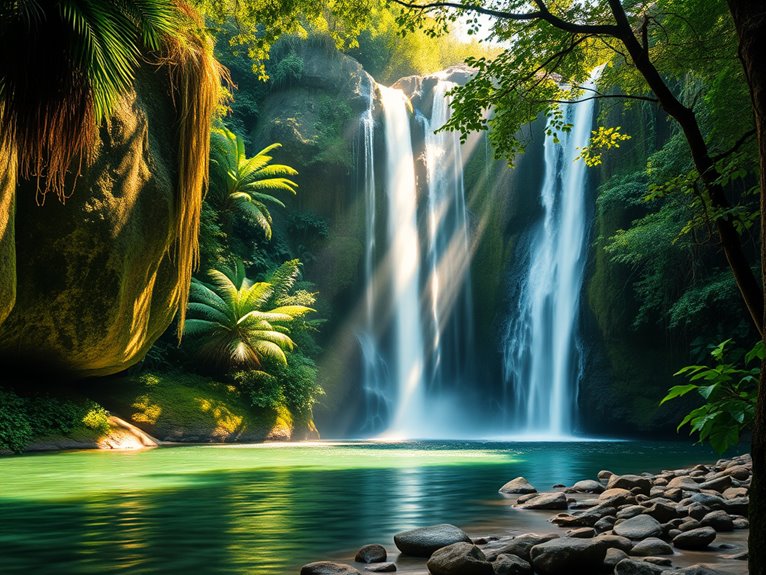
I’ve explored nine incredible waterfalls within an hour of Ubud that’ll blow your mind! From Instagram-famous Kanto Lampo with its unique rock formations to mystical Tukad Cepung where light beams pierce through canyon walls, each spot offers something magical. You can rent a scooter for 70,000-100,000 IDR daily or join guided tours for 400,000-600,000 IDR per person. Entry fees are budget-friendly at just 20,000-30,000 IDR, and I’ll show you exactly how to plan the perfect waterfall adventure.
Top Waterfall Destinations Near Ubud
When you’re exploring Ubud’s lush landscape, you’ll discover some of Bali’s most stunning waterfalls within easy reach! I’ve found five incredible destinations that’ll take your breath away.
Tegenungan highlights include its powerful cascade emerging from vegetation-clad cliffs – it’s the most accessible option with just a 20,000 IDR entry fee. For Uma Anyar serenity, you’ll love the multiple tiers and natural pools without tourist crowds.
Don’t miss Leke Leke’s cave setting or Kanto Lampo’s unique rock formations. Nung Nung offers dramatic views but requires more travel time from Ubud’s center.
Transportation Methods for Waterfall Adventures
Getting to these magnificent waterfalls requires some planning, and I’ll help you choose the best transportation method for your adventure! You’ve got several options to reach Bali’s stunning falls.
Planning your waterfall adventure in Bali? Multiple transportation options await, from budget scooters to comfortable private cars and guided tours.
Scooter rentals offer incredible freedom at 70,000-100,000 IDR daily. However, scooter safety demands confidence on chaotic roads – wear helmets and drive cautiously! Remember that an international driver’s license is required for motorbike rentals in Bali.
Ride hailing options like Grab and Gojek provide transparent pricing and convenience. Blue Bird taxis offer reliable metered service too.
Private car hire costs around 300,000 IDR to Tegenungan but accommodates families perfectly.
Group tours run 400,000-600,000 IDR per person, including guides and entrance fees.
What to Expect at Each Waterfall Location
Now that you’ve figured out how to get there, I’ll walk you through what awaits at each stunning waterfall location around Ubud. Each spot offers its own personality – from cave-hidden gems to easily accessible swimming holes with unique features you won’t find anywhere else. Let me break down the specific scenery, activities, and facilities you can expect at these natural wonders.
Most waterfalls maintain low entry fees of around 20,000-25,000 IDR, making them incredibly affordable additions to your Bali adventure.
Unique Features and Scenery
Five extraordinary waterfalls near Ubud each offer their own spectacular natural theater that’ll leave you absolutely mesmerized. I’ve discovered incredible waterfall aesthetics that showcase Bali’s diverse natural beauty through unique geological formations and breathtaking scenery.
| Waterfall | Signature Feature | Best Photo Spot |
|---|---|---|
| Tukad Cepung | Sunbeam cathedral | Canyon floor |
| Kanto Lampo | Jagged rock tiers | Base viewing area |
| Tibumana | Forest canyon pool | Plunge pool edge |
| Sumampan | Peaceful cascades | Multiple viewpoints |
Tukad Cepung’s canyon walls create mystical light beams, while Kanto Lampo’s tiered rocks form natural staircases. Tibumana offers lush forest surroundings, and Sumampan provides serene tranquility away from crowds. For the ultimate spiritual experience, Goa Rang Reng features a holy cave alongside its cascading waters, where locals perform traditional cleansing rituals.
Swimming and Activity Options
While each waterfall offers stunning views, you’ll find that swimming opportunities vary widely from one location to another. Tegenungan features deep pools with excellent water clarity, though slippery rocks demand caution. Taman Sari provides the most spacious swimming area – perfect for floating and confident swimmers!
Basic swimming etiquette applies: respect other visitors and keep noise levels reasonable. Suwat’s inviting pools offer clean water for reviving dips, while Uma Anyar provides quieter swimming experiences. Remember, there aren’t lifeguards on duty, so you’re responsible for your safety. Avoid swimming during heavy rains when currents strengthen considerably.
Many visitors appreciate having a knowledgeable guide who can share insights about the safest swimming spots and cultural significance of these sacred water sites.
Accessibility and Facilities
Before you head out to explore these magnificent waterfalls, understanding what facilities and accessibility options await you’ll help guarantee a smooth adventure. I’ve found that accessibility features vary dramatically between locations. Tibumana offers wheelchair-accessible tours, while Tegenungan provides the easiest walking paths for seniors. Leke Leke impresses with facility upgrades including new ticket buildings and restrooms. However, Tukad Cepung requires river walking that’s challenging for mobility issues. Nung Nung lacks trailhead facilities despite having parking amenities. For those with minor mobility issues, it’s essential to assess your individual capabilities before visiting any waterfall location to ensure a safe and enjoyable experience. Pro tip: Tegenungan’s popularity means better nearby restaurants and shops, making it ideal for extended visits with comfort needs.
Safety Precautions and Cultural Respect
I want to share some vital safety tips that’ll keep you safe and help you respect Bali’s sacred waterfall sites. These aren’t just suggestions – they’re essential guidelines that protect both you and the local communities who’ve maintained these natural treasures for generations. Let’s cover the must-know safety precautions and cultural practices that’ll make your waterfall adventure both memorable and respectful.
Getting travel insurance is highly recommended before exploring Bali’s waterfalls to protect yourself against potential accidents during your adventure.
Essential Safety Tips
I always wear sturdy shoes with excellent grip – slippery rocks are waterfall photography’s biggest enemy! Pack these hiking essentials: water bottles, first aid kit, and rain gear. Never visit during thunderstorms due to flash flood risks.
Check trail conditions before heading out, and ask locals about current water levels. Most waterfalls charge entrance fees that support village maintenance. Always respect safety barriers and warning signs – they’re there for good reason! Follow safety signs and guidelines, particularly when swimming, to ensure a safe and enjoyable experience.
Respecting Sacred Sites
When you visit Bali’s waterfalls, you’re stepping into sacred territory that’s been revered for over a thousand years. These aren’t just Instagram spots – they’re deeply spiritual places where locals practice ancient rituals.
I always dress modestly when visiting water temples like Tirta Empul. The Balinese follow cultural practices rooted in Tri Hita Karana philosophy, believing water holds sacred power. Their spiritual beliefs treat every natural element as having a soul. These sacred waters are found throughout fertile areas where communities have developed sophisticated irrigation systems connecting temples, rice terraces, and natural springs.
Before photographing, I ask permission. Some areas restrict cameras to preserve sanctity. Remember, you’re entering spaces where communities perform Melukat purification ceremonies. Respect local customs, and you’ll experience Bali’s true magic!
Entrance Fees and Available Facilities
Before you pack your swimsuit and grab your camera, you’ll want to know what visiting these stunning waterfalls will cost you. Entrance prices at Tegenungan Waterfall are IDR 20,000 for adults and IDR 10,000 for children, plus IDR 5,000 for parking. Other Ubud waterfalls typically charge IDR 15,000-30,000 per person.
The facility amenities make these fees worthwhile! You’ll find clean bathrooms, rental lockers for your belongings, and well-maintained paths with safety measures. Some popular sites even have on-site restaurants. The descent to Tegenungan involves 168 stairs leading down to the waterfall base. Bring cash though – cards aren’t accepted, and small bills help since change can be limited.
Best Photography Spots and Swimming Areas
Whether you’re hunting for that perfect Instagram shot or searching for a rejuvenating swim, Ubud’s waterfalls deliver both stunning photo opportunities and inviting natural pools. I’ll share my favorite spots that combine incredible photography techniques with safe swimming areas.
Ubud’s waterfalls offer the perfect blend of Instagram-worthy shots and refreshing swimming spots for adventure seekers.
Top Photography and Swimming Spots:
- Kanto Lampo – Instagram-famous cascades with professional guides helping perfect your poses
- Gembling – Serene forest pools ideal for swimming and unique backdrop shots
- Tegenungan – Accessible location with swimmable pools (mind the currents!)
- Sekumpul – North Bali’s breathtaking hidden gem
Remember swimming safety basics: check current conditions and follow local advice! Plan your visits during weekday mornings when crowds are thinner and the lighting is perfect for both photography and peaceful swimming experiences.
Half-Day and Full-Day Itinerary Options
Since you’ve got your camera ready and swimming gear packed, let’s map out the perfect waterfall adventure that fits your schedule! For itinerary planning, I recommend starting with your time constraints. Half-day tours last about four hours and include highlights like Tibumana Waterfall with its quick buggy ride experience. Full-day adventures offer thorough exploration of Tegenungan, Tibumana, and cultural sites like Ubud Royal Palace. Tour customization allows you to add Tegalalang Rice Terrace visits or local lunch experiences. Most tours include hotel pickup within Ubud, entry tickets, and meals – perfect for hassle-free waterfall hopping! To ensure the most personalized experience, look for tours that maintain small group sizes with a maximum of 8 travelers for more intimate waterfall exploration.
Guided Tours Vs Independent Exploration
Now that you’ve planned your perfect waterfall timeline, you’ll need to decide how you want to explore these natural wonders! Both guided tours and independent exploration offer unique benefits for discovering Ubud’s hidden cascades.
Guided tours provide:
- Expert local knowledge for remote spots like Sekumpul
- Safety support through challenging terrain
- Cultural insights and historical context
- Stress-free logistics including transport and fees
Independent exploration offers:
- Complete freedom to customize your pace
- Lower costs using scooters or local drivers
- Spontaneous detours to hidden gems
- Personal connection with each waterfall experience
Independent exploration typically costs around £35 for day trips, making it an excellent value option. Choose based on your comfort level!
Essential Packing Tips for Waterfall Visits
Three essential items can make or break your waterfall adventure in Ubud! I’ve learned this through countless soggy mishaps and uncomfortable hikes.
Waterproof gear tops my list. Pack a waterproof phone case, rain jacket, and quick-dry clothing. You’ll thank me when mist soaks everything around those cascading falls!
Insect protection comes second. Trust me, mosquitoes love waterfall areas. Bring strong repellent and long sleeves for evening exploration. Consider packing antihistamines for additional relief if you do get bitten during your waterfall trek.
Third, sturdy hiking boots with excellent grip. Slippery rocks near waterfalls don’t forgive poor footwear choices. Add reef-safe sunscreen, a first-aid kit, and plenty of water to complete your packing checklist.
Frequently Asked Questions
What Is the Best Time of Year to Visit Ubud Waterfalls?
Want to experience Ubud’s waterfalls at their absolute best? I’d recommend visiting during April and May for the perfect combination! You’ll catch amazing weather patterns right after the rainy season ends, giving you powerful water flows and lush scenery. The dry season from April to October offers safer hiking trails and sunny skies. These months also provide ideal conditions for seasonal activities like rice terrace visits and outdoor yoga sessions near the falls!
Are There Age Restrictions for Children Visiting Certain Waterfalls?
I’ll share the age restrictions I’ve found for Bali’s waterfalls! Most don’t have strict limits, but I recommend children be 5+ for Tegenungan due to steep steps. Sekumpul isn’t suitable for toddlers – too dangerous! Jungle swing activities require kids to be 10 or older. Water safety and child supervision are absolutely essential since trails aren’t pram-friendly and swimming’s often prohibited. You’ll need to carry young ones!
Can I Bring My Drone to Photograph the Waterfalls?
You’ll absolutely love capturing Bali’s waterfalls with your drone! But first, you must navigate drone regulations – register any drone over 250 grams with DGCA before flying. I recommend keeping your drone below 150 meters and maintaining 30 meters from people. For stellar photography tips, fly only during daylight hours and keep your drone within visual sight. Don’t forget your registration documents – authorities can request them anytime!
Do Any Waterfalls Near Ubud Have Natural Water Slides?
I’ve got exciting news for your adventurous experiences! While Ubud itself doesn’t have natural water slides, you’ll find amazing ones in North Bali. Lemukih Village offers a thrilling 150-foot natural slide above its waterfall – perfect for natural swimming! Kroya Waterfall near Sambangan also features smooth rock slides. Both are about 1.5 hours from Ubud, making them perfect day trips for unforgettable sliding adventures!
Are There Waterfall Visits Available During Nighttime or Evening Hours?
I’m afraid nighttime visits aren’t available at Ubud’s waterfalls. All major falls like Tegenungan close at 6:00 PM daily for safety reasons. The pathways become dangerous after dark, and there’s no lighting infrastructure. While you might dream of nighttime waterfall photography, it’s simply not permitted or safe. Your best bet? Visit during golden hour before closing time! Morning visits between 8-9 AM offer the best lighting and fewer crowds anyway.


